













The modern educational landscape has been fundamentally altered by an escalating crisis of violence. In the United States, school shootings have reached a tragic frequency, with 2022 recording a historic high of 51 incidents resulting in casualties. The nation has struggled with the terrible fallout from such incidents ever since the 1999 Columbine High School shooting. Since 1999, there have been over 400 school shootings. One in ten firearm-related deaths in the United States now occur among people 19 years of age or younger, making firearms the greatest cause of mortality for children and adolescents. More than 300,000 students have been victims of gun violence at school. These figures demonstrate how urgent it is to take action to stop catastrophes of this nature.
The disturbing trend is not isolated to any single region; it has sparked a global conversation—from the UK to the EU—regarding the vulnerability of “soft targets” like campuses and universities.
The danger of weapons on campus goes beyond the physical threat. The mere presence of firearms, knives, or even prohibited items like vapes and incendiary devices creates an environment of fear that stifles academic growth. For parents, administrators, and students, the mission is no longer just about academic excellence; it is about ensuring that every person who enters a school building returns home safely at the end of the day. Educational establishments have to strike a balance between establishing a welcoming atmosphere and putting strong security measures in place to ward against and deal with possible threats.

A multifaceted defense: strategies for campus security
To combat these evolving threats, schools are adopting a layered security architecture. No single tool is a “silver bullet” but rather a combination of technologies creates a robust safety net:
- Surveillance Systems. High-definition cameras with motion analytics provide real-time situational awareness and forensic evidence.
- Access Control. Secure fencing, electronic locks, and visitor management systems ensure that only authorized individuals enter the premises.
- Metal Detectors (WTMD). Traditional walk-through detectors are effective for identifying large metal objects but often struggle with high-traffic surges and cannot distinguish between a weapon and harmless personal items, leading to frequent manual searches.
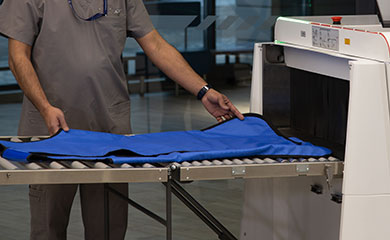
X-ray security baggage scanners have become an indispensable element of modern security protocols, providing an effective method of detecting concealed threats. Utilizing X-rays to generate images of the interior contents of objects like bags and personal belongings using penetrating scanners that penetrate surfaces can reveal hidden contents that allow security personnel to detect potential threats without engaging in physical searches. Security X-ray machines operate according to the principle of differential absorption, in which different materials absorb X-rays at differing rates, producing distinct contrasts in images generated from these scans that allows security personnel to easily distinguish among materials like metals, dense organic substances and synthetic compounds – an ability which is particularly essential when dealing with WMD components like metal casings, electronic circuits and hazardous substances that must be detected quickly and reliably.
By detecting guns and other forbidden objects before they enter school premises, the integration of sophisticated X-ray threat detection systems provides an extra degree of security. Airports and government buildings are no longer the only places that use X-ray technology. Its use in public areas and schools provides a proactive method of threat identification. By using high-resolution photography to detect explosives, concealed weapons, and other potentially hazardous materials, these systems make sure that dangers are reduced before they become more serious. Devices called X-ray bag scanners are made to check bags, backpacks, and other personal belongings for illegal substances like contraband, explosives, and guns. These systems:
- Use artificial intelligence to detect threats automatically.
- Minimize staffing needs by reducing the need for manual inspections.
- Speed up the screening process, particularly at busy places like school entrances.
- These scanners are an effective and non-intrusive way for educational institutions to improve safety without causing traffic jams.
Unmatched precision in identifying hidden dangers is offered by X-ray machines. Their capacity to provide precise images guarantees that there are few false positives while identifying weapons and dangerous objects. X-ray scanners provide a non-invasive screening alternative to manual bag inspections, enabling travelers and students to swiftly and easily navigate checkpoints. Systems like those made by LINEV Systems can be used in a variety of locations, from enormous public spaces to small school entrances. Additionally, they can be integrated with current security measures like surveillance networks and access control systems. People are deterred from trying to carry forbidden objects onto school property by the obvious presence of X-ray scanners. By taking this proactive step, situations can be prevented before they happen. By lowering the likelihood of violence, X-ray scanners help to create a setting where students may concentrate on their studies without worrying about their safety.
Even though X-ray detection systems have several advantages, privacy issues must be taken into account while implementing them. To guarantee acceptance and confidence in the technology, open and honest procedures and unambiguous communication with staff, parents, and students are crucial. In addition to K–12 schools, X-ray detection systems are essential for protecting public spaces such as community centers, libraries, and colleges. These settings frequently deal with comparable issues, such as controlling sizable crowds and avoiding unwanted entry. These areas can preserve an open and friendly ambiance while improving their overall security framework by implementing X-ray technology.
Redefining the gateway: LINEV Systems and the LV STREAM
At LINEV Systems, we recognize that a school is not a prison or an airport. Security must be effective yet remain “invisible” to the student experience. Our flagship solution, the LV STREAM, was engineered specifically to address the unique bottlenecks of educational facilities.
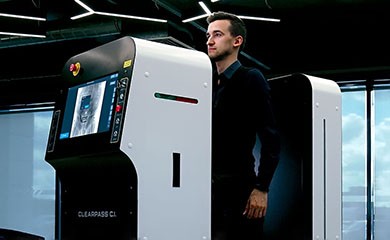
The LV STREAM is a high-throughput school X-ray scanner capable of processing over 1,300 bags per hour. This ensures that the “morning surge”—the 20-minute window when hundreds of students arrive simultaneously—does not result in long lines or missed classes. Its sleek, school-safe design and quiet operation allow it to blend into the campus environment while providing elite-level protection.
The power of AI: intelligent threat detection
The most significant advancement in our technology is the integration of Artificial Intelligence (AI). Traditional X-ray machines rely entirely on a human operator to catch a threat on a screen—a process prone to fatigue and distraction.
AI-driven detection changes the paradigm:
- Automatic Identification. Our AI algorithms are trained to instantly recognize firearms, knives, and bulk explosives.
- Beyond Metal. The system identifies threats based on shape and density data, catching disassembled weapon components that traditional detectors might miss.
- Reduced Friction. By automating the analysis of raw multi-energy data, the LV STREAM provides real-time alerts. This means security personnel only intervene when a high-probability threat is flagged, preserving student privacy and dignity.
Benefits of LINEV Systems’ X-ray bags scanners for schools
As a pioneer in X-ray technology, LINEV Systems provides cutting-edge solutions specifically designed to meet the demands of public areas and educational institutions. They have the following systems:- Cutting-Edge: Making use of AI and sophisticated imagery to accurately identify threats.
- Easy to Use: Made to be easily integrated into current security systems.
- Customizable: Adaptable to the needs of diverse settings, ranging from big university campuses to tiny schools.
- Institutions can actively contribute to the safety and well-being of their communities by investing in LINEV Systems’ X-ray systems.
*** Both DHS/FEMA as well as state/local law enforcement agencies offer up-to-date guidance and data.
By partnering with LINEV Systems, government agencies, security providers, and critical infrastructure operators can significantly improve their threat detection capabilities. Organizations benefit from a powerful deterrent effect, as the presence of LINEV Systems’ advanced screening systems discourages individuals or groups from using or transporting WMDs. LINEV Systems’ solutions enable enhanced border security through rigorous cargo and vehicle inspection processes at key ports of entry, further protecting against WMD smuggling. Critical infrastructure, including power plants, transportation hubs, major government buildings, and other high-value assets, become significantly more secure with proactive screening measures that minimize the risk of WMD-related attacks. LINEV Systems remains steadfast in advancing WMD detection technology through research, partnerships, and adaptable designs. This dedication ensures our solutions remain cutting-edge in this crucial security domain. To request a free audit of your current X-ray systems or to discuss your security needs, contact LINEV Systems US at 1-844-989-6789.
Countermeasures must change along with the dangers. X-ray detection devices are an essential part of contemporary security plans, but they work best when paired with other techniques like strong emergency preparedness and mental health care. In order to protect its students, employees, and guests, educational institutions must continue to be watchful and flexible. Schools, universities, and public areas can make it very evident that safety is a top priority by using cutting-edge technologies like X-ray detection. In addition to improving security, these technologies give people who often enter these areas a sense of assurance and trust.
Products for this solution

Small parcels and baggage inspection · AI-powered threat detection · Remote monitoring
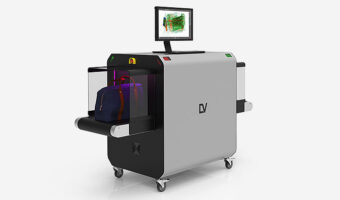
Small baggage inspection · AI-powered threat detection · Remote monitoring